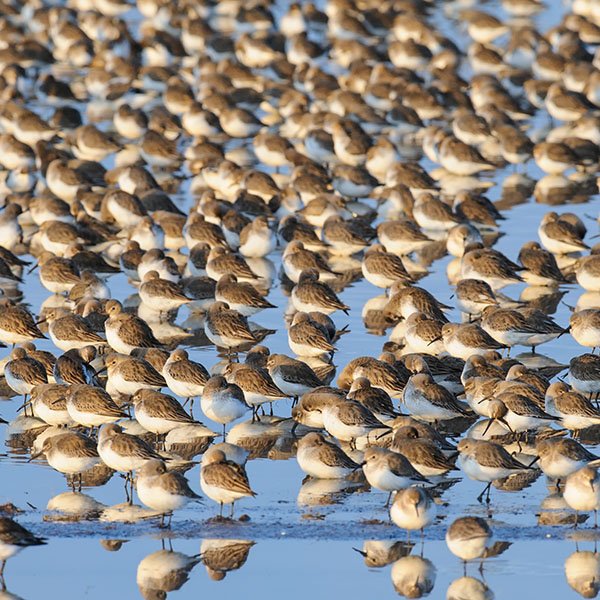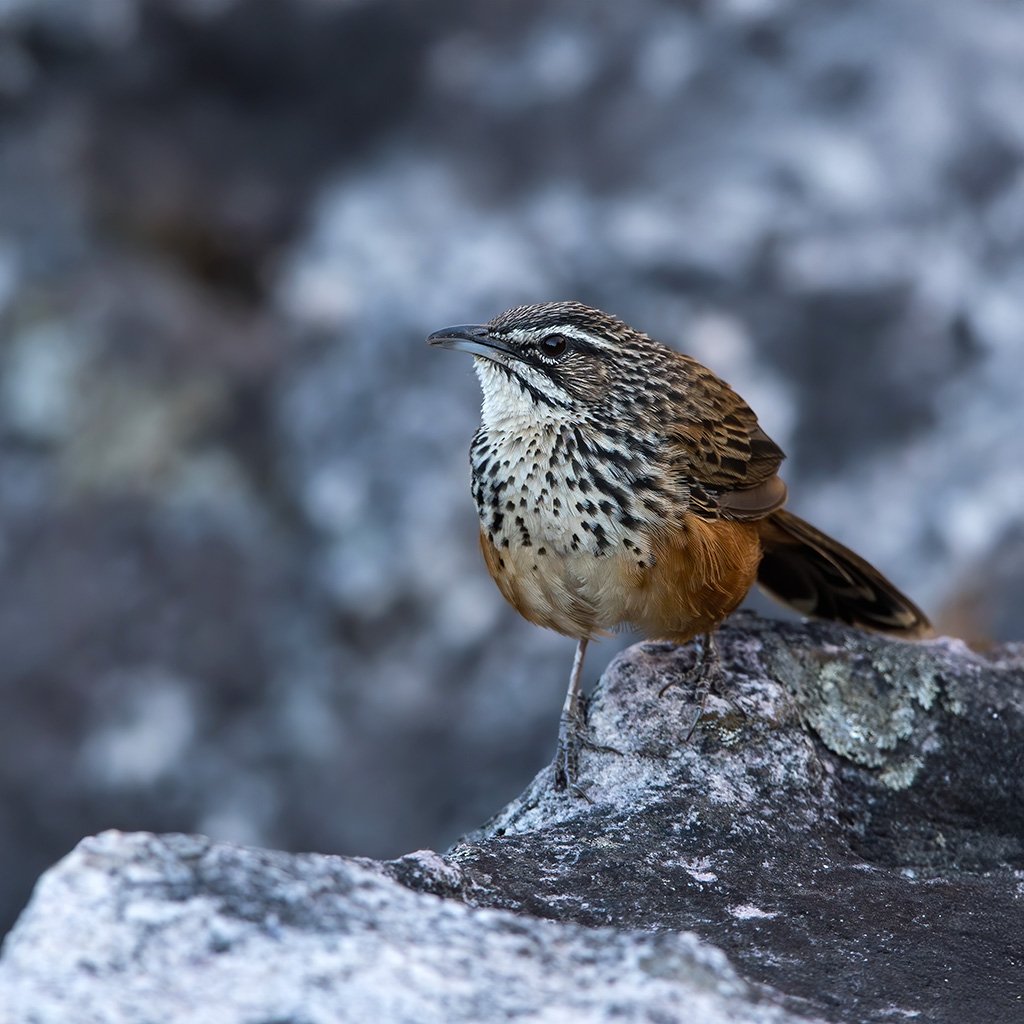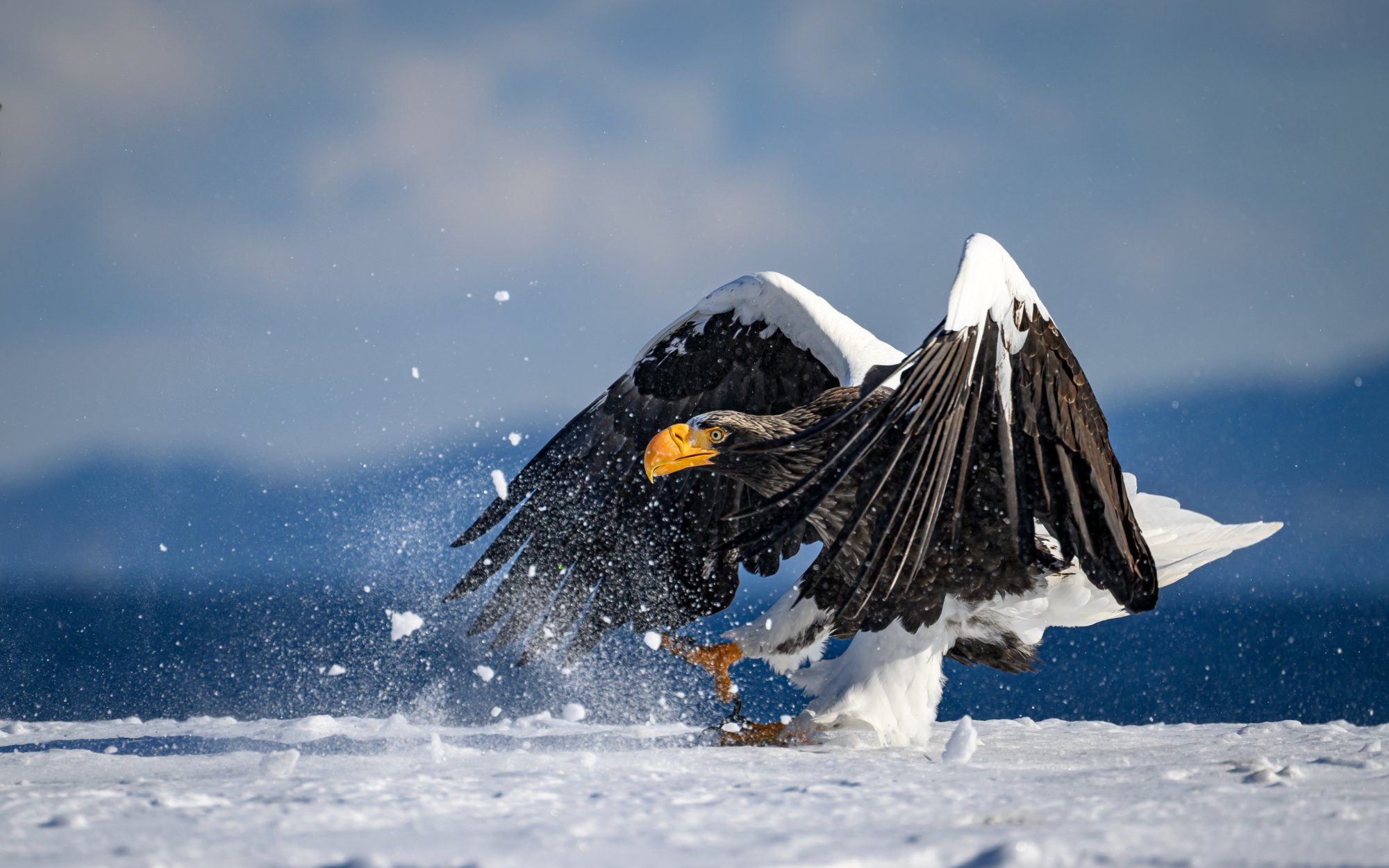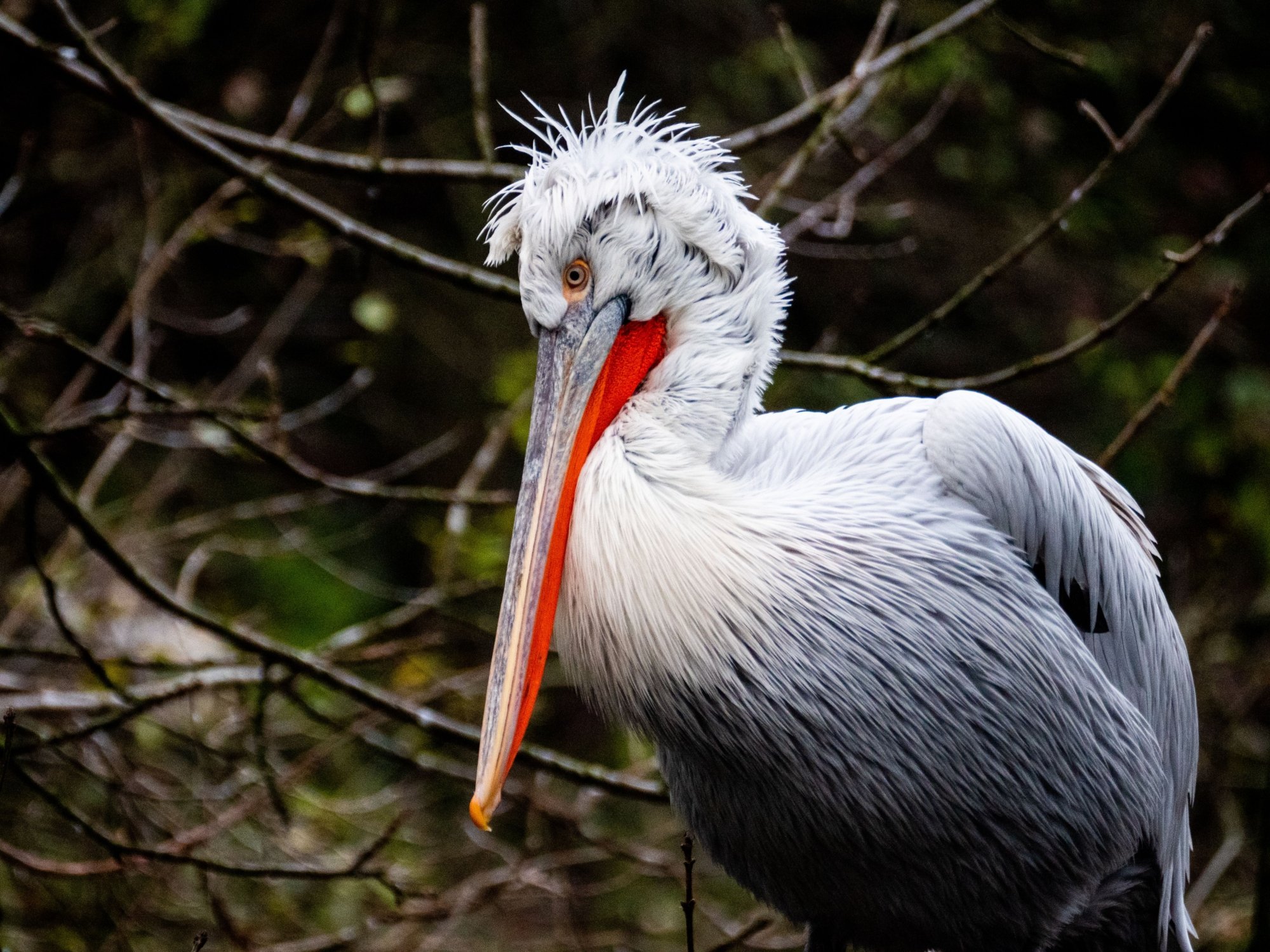
The tour begins in the Cusco region at Abra Málaga, a mountain pass at 4,316 meters (14,160 ft) renowned for its Andean endemics — among them Cuzco Brushfinch, White-tufted Sunbeam, Inca Wren, Royal Cinclodes, Red-and-white Antpitta, and Chestnut-breasted Mountain Finch. We then descend into Manu National Park, a UNESCO World Heritage Site covering 1.5 million hectares and home to more than 1,000 bird species, following the famous Manu Road through a spectacular succession of habitats: puna grasslands, elfin forest, and cloud forest. Here we encounter Peru’s national bird, the Andean Cock-of-the-rock, along with Crested Quetzal, Amazonian Umbrellabird, Orange-eared Tanager, and a dazzling diversity of hummingbirds.
The tour concludes in the lowland Amazon rainforest of the Madre de Dios basin, where three days at Manu Birding Lodge provide access to pristine primary forest, oxbow lakes, and the spectacular Collpa macaw clay lick. Target species here include Hoatzin, Agami Heron, King Vulture, Harpy Eagle, Crested Eagle, Spangled Cotinga, and Giant Otter.


Quick overview
Dates
June 21 – July 4, 2027
Number of days and nights
13 days / 12 nights
Start and end point
Starting: June 21, 2027 — Alejandro Velasco Astete International Airport, Cusco (CUZ). Plan to arrive before mid-afternoon. You will be met at the airport and transferred to your hotel.
Finishing: July 4, 2027 — Jorge Chávez International Airport, Lima (LIM). The tour concludes at Lima Airport. Plan departing international flights from the afternoon onward.
Group size
Minimum number of participants: 6
Maximum number of participants: 14
Brief itinerary
Terms and Conditions for ABA Travel and Events
Price in shared room
Single supplement
Included
Excluded
Detailed itinerary
Day 1 | Sunday, June 21 | Arrival in Cusco
Welcome to Peru. You will be met at Alejandro Velasco Astete International Airport in Cusco and transferred to your hotel. Cusco sits at 3,400 meters (11,155 ft) above sea level, and the remainder of the day is kept free to rest, explore the city at your leisure, and begin acclimatizing to the altitude. Cusco’s historic city center, a UNESCO World Heritage Site, offers excellent opportunities to experience Andean culture, colonial architecture, and Inca heritage.
Overnight: Cusco
Day 2 | Monday, June 22 | Cusco to Abra Málaga
We depart early for a three-hour drive to Abra Málaga, an important mountain pass at 4,316 meters (14,160 ft) on the road connecting Cusco with Quillabamba. The pass offers spectacular views of the surrounding Andean peaks and valleys, and the vegetation at the summit — puna grassland interspersed with stands of Polylepis forest — supports a remarkable community of specialized birds.
On the western slope we search for Andean endemics including Creamy-crested Spinetail, Chestnut-breasted Mountain Finch, White-tufted Sunbeam, Junín Canastero, and Rusty-fronted Canastero. The Polylepis stands hold the endangered Royal Cinclodes, Giant Conebill, Tawny Tit-Spinetail, Ash-breasted Tit-Tyrant, and the endemic White-browed Tit-Spinetail. Other targets near the summit include Puna Tapaculo, Purple-backed Thornbill, Blue-mantled Thornbill, Red-crested Cotinga, Andean Parakeet, Thick-billed Siskin, d’Orbigny’s Chat-Tyrant, and White-browed Chat-Tyrant.
In the afternoon, we begin descending toward Quillabamba, watching the landscape shift from puna to elfin forest and then to lush cloud forest. Birding stops along the road offer chances for Puna Thistletail, Diademed Tapaculo, Rufous-chested Tanager, Plushcap, Buff-breasted, Chestnut-bellied, and Scarlet-bellied Mountain Tanagers, as well as endemics including Urubamba Antpitta, Unstreaked Tit-Tyrant, Red-and-white Antpitta, Masked Fruiteater, Parodi’s Hemispingus, and Cuzco Brushfinch.
We spend the night at Tunkiwasi Lodge in the village of Inkatambo, a collection of comfortable stone cabins surrounded by cloud forest. The Andean Cock-of-the-rock — known as ‘Tunki’ in Quechua — makes regular appearances near the lodge, and feeders attract Bronzy Inca, Versicolored Barbet, Saffron-crowned Tanager, Red-crested Finch, and Inca Jay. At night, Lyre-tailed Nightjar is sometimes spotted near the cabins.
Overnight: Inkatambo
Day 3 | Tuesday, June 23 | Abra Málaga to Cusco
We start the morning with a visit to the feeders of local farmer Guido, whose family warmly welcomes us at their home near the lodge. Feeders here reliably attract Gould’s Inca, Speckled Hummingbird, Long-tailed Sylph, Chestnut-breasted Coronet, Silver-beaked Tanager, and Versicolored Barbet.
After that we explore the lower section of Abra Málaga, searching for the endemic Marcapata Spinetail and Inca Wren, along with Stripe-headed Antpitta, Grass-green Tanager, Diademed Tapaculo, White-browed Conebill, Trilling Tapaculo, and Rusty-and-yellow Tanager. We take a box lunch in the field before returning to Cusco in the late afternoon.
Overnight: Cusco
Day 4 | Wednesday, June 24 | Cusco to Wayqecha Biological Station
We depart at 5:00 am for Manu National Park, a UNESCO World Heritage Site covering 1.5 million hectares and home to more than 1,000 bird species. The 3.5-hour drive northeast of Cusco passes through traditional Andean communities and sweeping high-plateau landscapes. Along the way we pass the charming town of Paucartambo (2,900 m / 9,514 ft) and may encounter Puna Ibis, Black-faced Ibis, Andean Flicker, and Mourning Sierra-Finch.
We arrive at the Acjanaco Pass (3,360 m / 11,024 ft), the official entrance to Manu National Park and the starting point of the legendary Manu Road — widely considered one of the finest birding routes in South America. The road descends through an extraordinary sequence of habitats, from puna and elfin forest at the top to Amazonian lowland at around 150 meters, generating one of the most remarkable elevational bird turnovers on Earth.
We spend the morning birding near the park entrance, with chances for White-collared Jay, Grass-green Tanager, Golden-collared Tanager, Hooded Mountain Tanager, Scarlet-bellied and Chestnut-bellied Mountain Tanagers, Gray-breasted Mountain Toucan, Mountain Cacique, Streak-throated Bush-Tyrant, Rufous-bellied Bush-Tyrant, Drab Hemispingus, Gray-browed Brushfinch, and Black-capped Hemispingus.
We spend the night at Wayqecha Biological Station (3,000 m / 9,843 ft), a 1,450-acre research center in the Kosñipata Valley dedicated to cloud forest ecology and conservation. The station’s canopy walkway — a suspended bridge above the treetops — is a highlight. Fruiting trees around the lodge attract Grass-green Tanager, Golden-collared Tanager, Scarlet-bellied Mountain Tanager, Hooded Mountain Tanager, and Masked Flowerpiercer; hummingbird feeders draw Amethyst-throated Sunangel, Tyrian Metaltail, Gould’s Inca, and Violet-throated Starfrontlet.
Overnight: Wayqecha Biological Station
Day 5 | Thursday, June 25 | Wayqecha Biological Station to Cock-of-the-Rock Lodge
We begin the morning at the antpitta feeding stations, where Leymebamba Antpitta and two endemics — Urubamba Antpitta and Red-and-white Antpitta — are reliably drawn in.
After breakfast, we descend to the San Pedro area and enter the true cloud forest — dense, moss-draped, and perpetually humid with moisture rising from the Amazon below. Target species include Golden-headed Quetzal, Crested Quetzal, Black-streaked Puffbird, Barred Becard, Crimson-mantled Woodpecker, Barred and Band-tailed Fruiteaters, White-throated Tyrannulet, Black-and-chestnut Eagle, Masked Trogon, White-eared Solitaire, Blue-banded Toucanet, White-crowned Tapaculo, Chestnut-crested Cotinga, Orange-eared Tanager, Flame-faced Tanager, Deep-blue Flowerpiercer, and the endemic Inca Flycatcher.
We make a stop at the Manu Bird Sanctuary, where hummingbird feeders attract Long-tailed Sylph, Bronzy Inca, Green-fronted Lancebill, White-bellied Woodstar, Violet-fronted Brilliant, Rufous-booted Racket-tail, Speckled Hummingbird, and Fawn-breasted Brilliant.
We arrive at the Cock-of-the-Rock Lodge (1,600 m / 5,249 ft), named after Peru’s national bird. The lodge sits in the cloud forest beside a river, its dining room overlooking hummingbird feeders visited by Wire-crested Thorntail, Violet-fronted Brilliant, Rufous-booted Racket-tail, and occasionally the spectacular Buff-tailed Sicklebill. Fruit feeding tables attract Silver-beaked Tanager, Versicolored Barbet, Buff-throated Saltator, Blue-gray Tanager, Golden-bellied Euphonia, and Golden Tanager. Large-headed Capuchin monkeys visit the garden and occasionally the dining room.
Overnight: Cock-of-the-Rock Lodge
Day 6 | Friday, June 26 | Cock-of-the-Rock Lodge
A full day based at the lodge, with birding along the road and at key sites in the area. We begin with a visit to the Manu Tanager Garden, maintained by the Fernandez family — one of the few households along the Manu Road. Their feeders attract Versicolored Barbet, Rusty-naped and Golden-eared Tanagers, Golden Tanager, Golden-collared Honeycreeper, Long-tailed Sylph, Bronzy Inca, and Rufous-booted Racket-tail.
We then visit the nearby Andean Cock-of-the-rock lek, where males perform their spectacular, noisy courtship displays from a roofed wooden terrace close to the road — one of the most memorable wildlife experiences of the entire tour. The river near the lodge is also worth checking for the always-thrilling Torrent Duck.
Along the road, we search for mid-altitude montane species including Blue-banded Toucanet, Olive-backed Woodcreeper, Montane Foliage-gleaner, Crested Quetzal, Paradise Tanager, Chestnut-backed Antshrike, Yungas Manakin, Geoffrey’s Wedgebill, Crimson-bellied Woodpecker, Blue-naped Chlorophonia, Amazonian Umbrellabird, Andean Solitaire, Chestnut-tipped Toucanet, and Solitary Eagle, among many others.
Overnight: Cock-of-the-Rock Lodge
Day 7 | Saturday, June 27 | Cock-of-the-Rock Lodge to Manu Biological Station
We continue descending the Manu Road into warmer, lower-elevation habitats. Secondary and transitional forest birds come to the fore, including Swallow Tanager, Turquoise Tanager, Green-and-gold Tanager, Blue-crowned Trogon, Bat Falcon, and Speckled Chachalaca.
A stop at the Manu Endemic Station provides excellent hummingbird feeder views, with White-browed Hermit, Green Hermit, Pale-tailed Barbthroat, Great-billed Hermit, Wire-crested Thorntail, Gray-breasted Sabrewing, and occasionally Buff-tailed Sicklebill.
In the afternoon we arrive at Manu Biological Station (formerly Villa Carmen), managed by Amazon Conservation and spanning a transition zone between the Andes and the Amazonian lowlands (480–1,200 m / 1,575–3,937 ft). Located within the buffer zone of Manu National Park, the station is a biodiversity hotspot with more than 650 bird species recorded in the area. Wooden cabins with private bathrooms, hot water, electricity, and Wi-Fi overlook a small lake.
Overnight: Manu Biological Station
Day 8 | Sunday, June 28 | Manu Biological Station
We spend the full day exploring trails around the station and the small lake, with targets including Rufescent Tiger-Heron, Blue-throated Piping-Guan, Purplish Jay, Red-capped Cardinal, Crimson-crested Woodpecker, Ringed Woodpecker, and the extraordinary Hoatzin. Night walks are also available in search of Spectacled Owl, Tawny-bellied Screech-Owl, Black-banded Owl, Scissor-tailed Nightjar, and Silky-tailed Nightjar.
We visit Mirador Pico de Hoz, a beautiful community-run private reserve of six reforested hectares with gardens, feeders, trails, and a lake. Hummingbird feeders here attract White-necked Jacobin, Sapphire-spangled Emerald, Pale-tailed Barbthroat, White-bearded Hermit, Great-billed Hermit, Golden-tailed Sapphire, Long-billed Starthroat, and the stunning Butterfly Coquette. The reserve owner has cultivated special feeding relationships with Amazonian Antpitta, Undulated Tinamou, Goeldi’s Antbird, White-browed Antbird, White-lined Antbird, and Russet-crowned Crake. The reserve is also the only site in Peru reliably visited by King Vulture, observable from a dedicated hide along with Greater Yellow-headed, Turkey, and Black Vultures.
A second garden, Inka Amazonia, is run by a local family and offers another suite of hummingbirds — White-browed Hermit, Gould’s Jewelfront, Black-throated Hermit, Violet-headed Hummingbird, Blue-fronted Lancebill, the endemic Koepcke’s Hermit, and Rufous-crested Coquette — plus fruit feeders visited by Lemon-throated Barbet, Turquoise Tanager, Yellow-bellied Dacnis, Masked Tanager, and Green Honeycreeper.
Overnight: Manu Biological Station
Day 9 | Monday, June 29 | Manu Biological Station to Manu Birding Lodge
We drive to the town of Atalaya, where the Tambo and Urubamba rivers converge to form the Ucayali River, and board a motorized boat for the journey to Manu Birding Lodge. During the several-hour river transit, we scan for Black Skimmer, Sand-colored Nighthawk, Great Potoo, Capped Heron, Pied Lapwing, Great Black-Hawk, Horned Screamer, Yellow-billed Tern, Orinoco Goose, and many others.
Overnight: Manu Birding Lodge
Days 10–12 | Tuesday, June 30 – Thursday, July 2 | Manu Birding Lodge
Three full days at Manu Birding Lodge (280 m / 920 ft), situated on the banks of the Madre de Dios River at the border of Manu National Park. The lodge is surrounded by more than 500 hectares of pristine Amazon rainforest. Comfortable wooden rooms have private bathrooms with hot water, mosquito nets, and charging outlets.
We explore a variety of habitats: transition forest, primary and secondary forest, oxbow lakes, and the macaw clay lick. The lodge’s observation tower, nearly 40 meters high, offers unobstructed canopy views and excellent opportunities for White-necked Puffbird, White-throated Toucan, Golden-collared Toucanet, Cream-colored Woodpecker, Ornate Hawk-Eagle, King Vulture, Crested Eagle, Harpy Eagle, and Spangled Cotinga. The fruit feeder near the dining area is regularly visited by Emperor Tamarin, Goeldi’s Monkey, and Weddell’s Saddle-back Tamarin.
We visit Cocha Blanco, an oxbow lake reached by floating platform. Species here include Least Grebe, Hoatzin, Green Ibis, Green-and-rufous Kingfisher, Horned Screamer, Sungrebe, Agami Heron, Silvered Antbird, Band-tailed Antbird, Amazonian Streaked Antwren, Butterfly Coquette, Hairy-crested Antbird, Plum-throated Cotinga, Amazonian Pygmy-Owl, Great Jacamar, Screaming Piha, Fasciated Antshrike, Plumbeous Antbird, and Black-capped Donacobius. Caimans are frequently seen, and Giant Otters are possible.
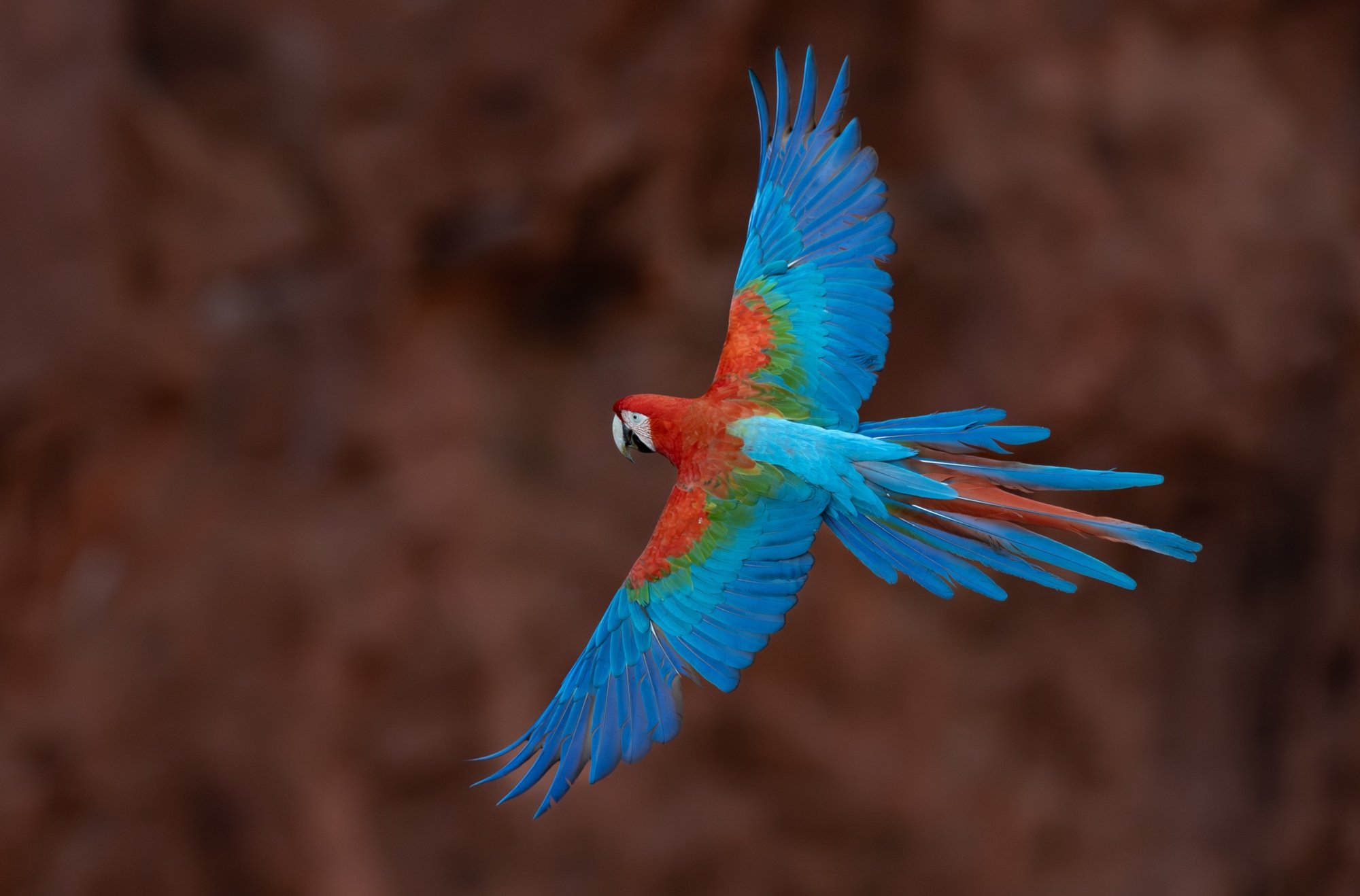
On our final morning at the lodge, we depart early by boat to the Collpa Clay Lick observatory, one of the most spectacular wildlife spectacles in Amazonia. Here, groups of Blue-and-yellow Macaws, Scarlet Macaws, Red-and-green Macaws, Mealy Parrots, Blue-headed Parrots, Orange-cheeked Parrots, and Chestnut-fronted Macaws descend to feed on mineral-rich clay, with activity varying depending on the presence of raptors such as Ornate Hawk-Eagle and Crested Eagle in the vicinity. Afterward, we explore the nearby Cocha Camungo oxbow lake by floating platform.
Overnights: Manu Birding Lodge
Day 13 | Friday, July 3 | Manu Birding Lodge to Puerto Maldonado and Lima
We set out early by boat for the village of Colorado (approximately three hours), making opportunistic stops along the river for any birds or wildlife of interest. From Colorado, our driver transfers us to Puerto Maldonado Airport for an afternoon flight to Lima. We overnight at the airport hotel so you can plan your flights to depart any time tomorrow, July 4th.
Overnight: Costa Del Sol Wyndham, Lima Airport
Day 14 | Saturday, July 4 | Departure from Lima
Departure from Lima (LIM).
Highlights
| Birds |
Andean Cock-of-the-rock, Crested Quetzal, Amazonian Umbrellabird, Royal Cinclodes, Diademed Tapaculo, Cuzco Brushfinch, Red-and-white Antpitta, Urubamba Antpitta, Agami Heron, Hoatzin, King Vulture, Harpy Eagle, Crested Eagle, Spangled Cotinga, Butterfly Coquette, Koepcke’s Hermit, Giant Otter |
|---|---|
| Habitats |
Inter-Andean valleys, Polylepis forest, puna grasslands, elfin forest, cloud forest (1,000–3,000 m), transitional Andean-Amazonian forest, primary and secondary Amazon rainforest, oxbow lakes, rivers, local family feeder gardens (Manu Tanager Garden, Inka Amazonia, Mirador Pico de Hoz), Andean Cock-of-the-rock lek, macaw clay lick at Collpa |
| Altitude range |
280 m / 920 ft (Manu Birding Lodge) to 4,316 m / 14,160 ft (Abra Málaga summit) |
| Culture & history |
Traditional Andean communities and markets en route to Manu |
| Conservation & sustainable development |
Visits to Manu National Park (UNESCO World Heritage Site; >1,000 bird species); Amazon Conservation’s Manu Biological Station; community-run private reserves (Mirador Pico de Hoz); Polylepis forest habitat for endangered Royal Cinclodes and White-browed Tit-Spinetail |
Focus, difficulty, and comfort
Focus
Difficulty & physical strain
Comfort
Practical details
Climate & weather
June–July falls within the dry season across most of the tour area — generally the best time of year for travel in southern Peru. At Abra Málaga, cold temperatures, fog, and rain are possible at any time; warm, waterproof layers are essential. The cloud forest (Wayqecha and Cock-of-the-Rock Lodge) is cool and frequently misty. The Amazon lowlands are warm and humid year-round (25–33°C / 77–91°F), with occasional afternoon rain showers even in the dry season.
Health
Consult the Travelers’ Health page of the Centers for Disease Control and Prevention (CDC) or the website of the Government of Canada for the latest information on health and vaccination requirements. Altitude is the primary health consideration. Cusco sits at 3,400 m, and Abra Málaga reaches 4,316 m. Participants should consult their physician before travel regarding altitude precautions, including the possible use of acetazolamide. Adequate hydration and rest on Day 1 are strongly recommended. Yellow fever vaccination is recommended for travel to the Amazon region; consult the CDC Travelers’ Health page or your country’s travel health authority for current guidance. Malaria prophylaxis may also be advisable for the Manu lowland sections — consult your physician. Comprehensive travel and medical insurance is strongly recommended. Participants must disclose any relevant pre-existing medical conditions prior to departure.
The tour involves a combination of vehicle travel, boat journeys, and walking on forest trails of varying difficulty. Getting in and out of boats can be demanding, particularly when riverbanks are muddy after rain. The Amazon sections involve flat walking on established trails.
Passport and visas
Consult the websites of the Department of State (for US citizens) or the website of the Government of Canada or the latest information of entry, exit, and visa requirements.
Money
The Peruvian Sol (PEN) is the local currency. U.S. dollars are widely accepted at hotels and lodges. Credit cards are accepted in Cusco and Lima but not at remote lodges; participants should carry sufficient cash for personal expenses in the field.